About Rwanda Peace Academy
The Rwanda Peace Academy (RPA) is a regional peacekeeping training and research institution under the Ministry of Defence. It is recognized by the Eastern Africa Standby Force (EASF) as one of its regional peacekeeping training centres.
BACKGROUND
Cognisant of the fact that there are peacekeeping training centres in Africa and in the sub-region, the Government of Rwanda (GoR) established the Rwanda Peace Academy.
The Academy was established with the initial financial support from the Government of Japan and the United Nations Development Programme (UNDP). The GoR also provided, and continues to provide, support in various forms. The project for the establishment of the RPA ended on 31st December 2012 when the training facility and its equipment were officially handed over to the Government of Rwanda.
RPA STATUS
Currently, the RPA is a member of the Association of Security Sector Reform Education and Training (ASSET). It is also member of the International Association of Peacekeeping Training Centres (IAPTC) as well as the African Peace Support Trainers Association (APSTA). The East African Community (EAC) has designated the RPA as the sole peacekeeping training institution charged with training of personnel from corrections/prison services of the EAC Partner States in the area of Peace Support Operations (PSO). The RPA is the only peacekeeping training and research centre in Rwanda that offers integrated PSO training.
The RPA equips military, police and civilian personnel, mainly but not limited to the EASF region, with the competences and knowledge required to participate in Peace Support Operations (PSOs) that seek to meet Africa’s present and future complex peace and security challenges.
The Academy contributes to the full operationalization of the EASF and consequently the African Standby Force (ASF) by enhancing sub-regional and regional capacity for conflict prevention, management, resolution and peace building.
The RPA intends to conduct academic studies in future. This strategic plan (2016-2021) sets out key considerations and objectives with the aim of developing the RPA as an institution over the next five years. The strategic plan is a framework for the RPA’s operations including a Monitoring and Evaluation (M&E) component.
Rationale for Establishment of the RPA
The establishment of the RPA was informed by five factors.
First, while several shortcomings of PSOs can be explained by political issues related to the specific context of the conflict, poor performance of international stabilisation and PSOs can also be explained by a lack of staff with the right skills. The RPA attempts to address this point by focussing on practical elements of peacekeeping and peace building in all its training programmes and by using real world situations and scenarios drawn from current PSOs as the basis for instruction.
Second, in addition to regional and international best practices, Rwanda offers a unique background of experiences to draw from in the area of post-conflict recovery and peace building including practical case studies of home grown solutions. Rwanda’s own experience of liberation war and the Genocide against the Tutsi and ensuing efforts to develop the country provide important contexts for developing training in conflict management and resolution.
Third, the establishment of the RPA was informed by Rwanda’s active and significant contribution to regional and international peacekeeping. Rwanda is the second largest African Troop and Police Contributing Country to the UN peacekeeping operations and the 5th largest globally; more than ever before, Rwanda needs a peacekeeping training and research centre. Moreover, the RPA is the only peacekeeping training institution in the country that offers integrated PSO training.
Fourth, while there are several peacekeeping training centres in other sub-regions, there are only two in Eastern Africa (Kenya and Ethiopia). There is need therefore to expand out the regional PSO training infrastructure in Eastern Africa in order to support a growing eastern African peace and security architecture.
Fifth, while there is peace in Rwanda, it was felt that the Rwanda Peace Academy could contribute to further national peace consolidation through developing a cutting edge peace training and research. There is a strong realization in Rwanda that sustainable development cannot be achieved if there is no peace and security in the country.
VISION
To be a Peace Support Operations (PSOs) and Peacebuilding, Training and Research Centre of Excellence.
MISSION
To provide internationally recognised professional training courses and educational programmes informed by applied research to equip military, police and civilian personnel, predominately from the eastern Africa region, with the relevant knowledge, competencies and skills needed to effectively participate in Peace Support Operations and peacebuilding initiatives.
MOTTO
Peace and Security for Sustainable Development.
OBJECTIVES
A. To enhance national, sub regional and regional capacity for conflict prevention, conflict management, conflict resolution and peace building, by drawing on Rwanda’s extensive peace building experience based on homegrown solutions and international best practices, as well as anticipating and preparing for future challenges.
B. To contribute to the development of a sub regional and regional capacity in the delivery of integrated Peace Support Operations at the strategic and operational levels.
C. To support the African Union Peace and Security Architecture and regional initiatives by adding value through research and innovative thinking, capacity building and exchanges at the regional and international levels.
D. To enhance the understanding of critical peace and security issues, particularly the recovery-development nexus, at the regional and international levels.
E. To establish collaborative relations with national and international institutions and to organize public events to raise awareness and promote understanding of peacebuilding at the national and international levels.
F. To create an effective, efficient and sustainable management and support arrangements for the Rwanda Peace Academy.
G. To enhance the understanding of critical peace and security issues, particularly the recovery-development nexus, at the regional and international levels.
H. To establish collaborative relations with national and international institutions and to organize public events to raise awareness and promote understanding of peace building at the national and international levels.
I. To create an effective, efficient and sustainable management and support arrangements for the Rwanda Peace Academy.
CORE VALUES
Excellence; Professionalism; Mutual Respect; Dignity; Integrity; Democratic Culture and Accountability.
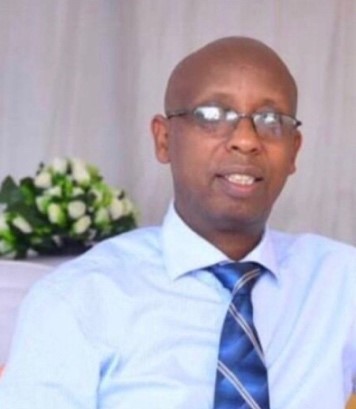
The Director
Colonel (Rtd) Jill RUTAREMARA
Director
Colonel (Rtd) Jill Rutaremara is currently the Director of the Rwanda Peace Academy, a regional peacekeeping training and research institution. He is also a member of the interim Board of Directors of Rwanda Cooperation (RC), Rwanda’s hub for learning that promotes the country’s innovative initiatives through South-South and Triangular Cooperation. Rutaremara is also a member of the RDF team on the project for establishing National Defence University, Rwanda (NDU, R).
Colonel (Rtd) Jill Rutaremara was born in Rwanda on 24 October 1960, but he largely grew up a refugee in Uganda following the 1959 pogroms in Rwanda. There, Rutaremara pursued university education and, after graduating, worked at Kenyatta High School (Mwatate, Kenya) and Burhaniya High School (Mombasa) as a teacher and Head of the Biology Department from October 1984 to October 1990.
In October 1990, Rutaremara joined the Rwandan Patriotic Army (RPA), a liberation force that later transformed into the Rwanda Defence Force (RDF). Rutaremara has attended various military professional courses that include; senior command and staff course at the Armed Forces Command and Staff College (AFCSC) in Jaji - Kaduna (Nigeria), and Grade 3 (Junior) Course at the Rwanda Military Academy (RMA). Rutaremara also holds a Master of Arts (MA) degree in International Security and Civil Military Relations from the Naval Post Graduate School (NPS) in Monterey, California (USA) and a Master of Arts (MA) degree in International Studies from the National Defence College/University of Nairobi. He is also a holder of Bachelor of Science (BSc) degree (with honours) in zoology and botany, and a Postgraduate Diploma in Education (PGDE), both from Makerere University in Kampala, Uganda.
Jill Rutaremara held various appointments in the Rwanda Defence Force (RDF) before his retirement in July 2020. These include: Head of Civil Military Cooperation; Director of Political Education; and Director of Formal Education at the Defence Force Headquarters, as well as Political Commissar (PC) at the Rwanda Military Academy. He also served as the Military and Defence Spokesman, as well as the Director of Defence Planning and Cooperation at the Ministry of Defence.
Jill Rutaremara also served as Administration/Personnel Officer under the African Union Mission in Sudan (AMIS), a board member of Zigama Credit and Savings Society (Zigama - CSS), as well as the board member of Military Medical Insurance (MMI).
In addition to serving as a teacher in Kenya, Rutaremara has held other appointments outside the military and defence establishments. While representing the Rwandan Patriotic Army, Rutaremara served as a Member of Parliament (MP) for the Transitional National Assembly in Rwanda. He also served as the Prefet of the former Umutara Prefecture (province). Furthermore, he worked as a part – time lecturer in the Department of Political Science, University of Rwanda. Jill Rutaremara has attended several international, regional and national conferences, workshops and training courses, and has delivered presentations in various peace and security fora.
Col (Rtd) Jill Rutaremara is a recipient of RDF awards that include: National Liberation Medal; Campaign Against Genocide Medal; Presidential Inauguration Medal; Community Service Ribbon; and Peace Missions Medal.